While it really didn't get much traction publicly, DOS Studio has been a great utility for me and it also solves an upcoming issue that'd hit us very soon: 32-bit Protected Mode.
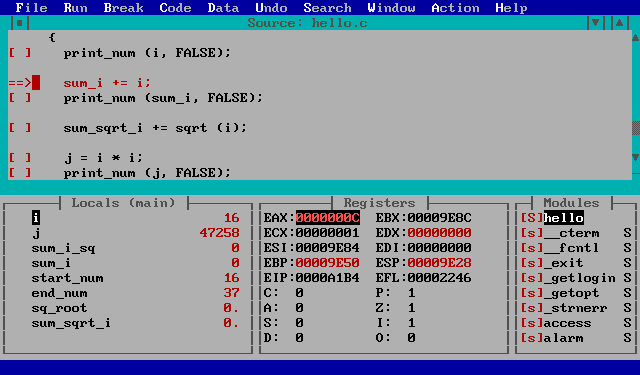
Borland C++ 3.1 doesn't support it AND there's currently not a textmode IDE available for it like Borland exists - compiling by command line (the debugger is pretty nifty though). I knew I was coming up to this limitation soon and my plan was a more ambitious "well, I'll just have to write an IDE in DOS myself!" And while that prospect actually still is appealing to me when I say it aloud, I know that realistically the time sink of that could be gargantuan... maybe someday.
The thing is, though, DOS Studio is a pretty full featured IDE in a UI sense; it's not TIED to OpenWatcom v2 very tightly. Sure, the debugging hooks are a bit boutique but sending code to the backend can send code to any backend - such as an NES one... or a C64 one... or a Game Boy one... or a.. okay I mean, that's the point.
With the "OS" framework I made with Operating System and Thank You (OSnTY) it's also become apparent just how useful it is to create tools that live beside DOS Studio for creating content: pixel art, tracker-style music, sfx. With the "Drive" paradigm already in place it's easy enough to create something and drop it in a project's folder ready to go. And that's what we're gonna do - we're gonna go.